Law of Immutability

Kishio Suga

Kishio Suga was born in Morioka, Japan, and is one of the central figures of Mono-ha, a Japanese art movement of the late 1960s and early 1970s whose name translates roughly as "School of Things”. Mono-ha artists worked with natural and industrial materials in mostly unaltered states, emphasizing the relationships between things, spaces, and humans. Over a practice spanning more than fifty years, Suga has continued to develop this thinking and is now recognized as one of the most significant figures in postwar Japanese art. His work is held by institutions including Centre Pompidou, Tate Modern, The Museum of Modern Art New York, and Dia Art Foundation.


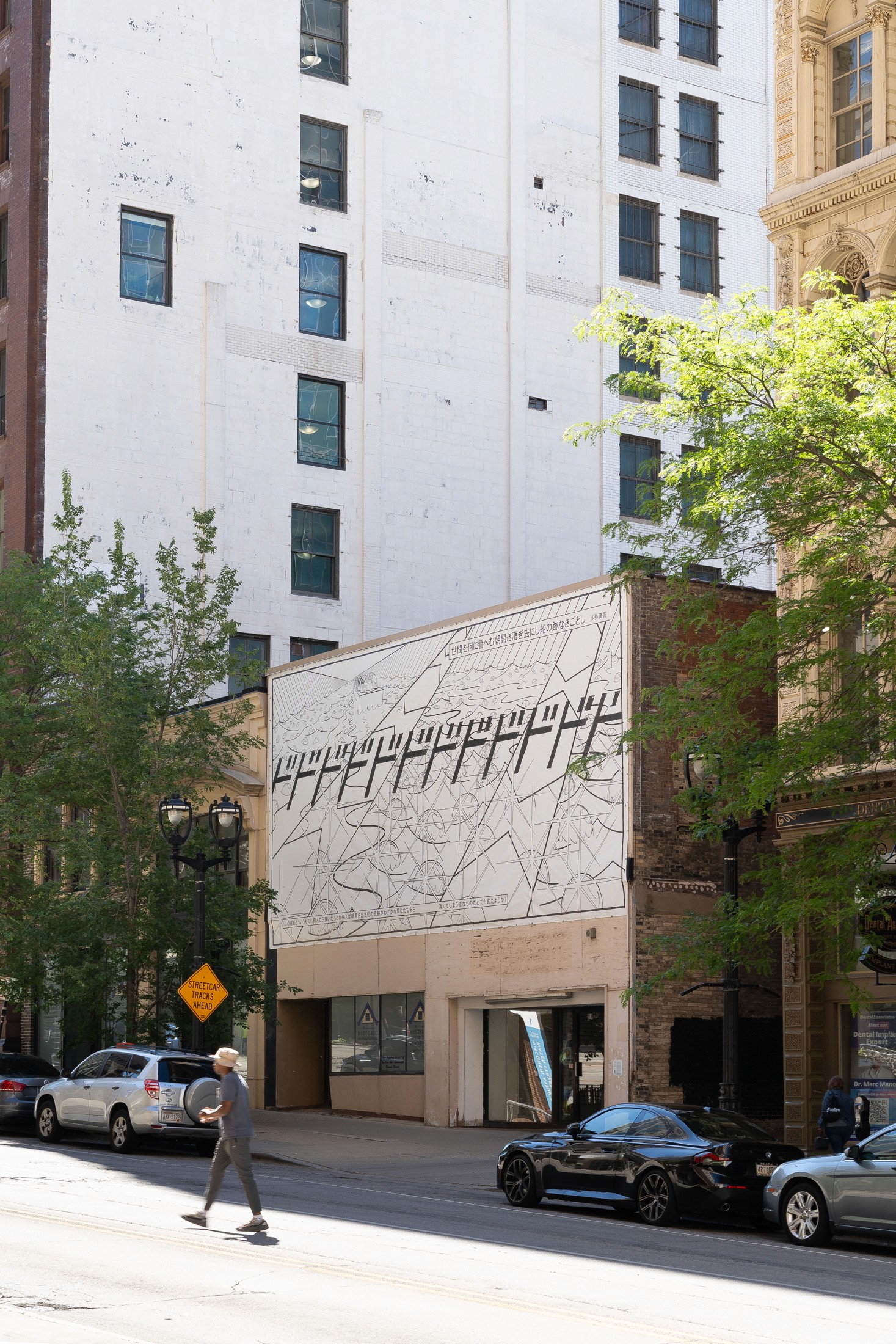
Originally created in 1974 on the bank of the Tama River in Japan, Law of Immutability places poly bags directly onto existing stones found on site, combining the natural and the manufactured, heaviness and lightness, solidity and vulnerability, in a quiet, open-ended dialogue. This work asks what happens when familiar materials are simply placed together, without transformation, and allowed to be — how relationships between things emerge, how we perceive the world.


Law of Immutability is presented in collaboration with Tomio Koyama Gallery, one of Japan's leading contemporary art galleries, Mizuki Takezaki, a fellow of the Agency for Cultural Affairs, Government of Japan and a curator of the Marugame Genichiro-Inokuma Museum of Contemporary Art (MIMOCA), and the Milwaukee War Memorial Center (Milwaukee, WI). This work is part of Power of the Margins, Sculpture Milwaukee's 2026 exhibition.


Kishio Suga was born in Morioka, Japan, and is one of the central figures of Mono-ha, a Japanese art movement of the late 1960s and early 1970s whose name translates roughly as "School of Things”. Mono-ha artists worked with natural and industrial materials in mostly unaltered states, emphasizing the relationships between things, spaces, and humans. Over a practice spanning more than fifty years, Suga has continued to develop this thinking and is now recognized as one of the most significant figures in postwar Japanese art. His work is held by institutions including Centre Pompidou, Tate Modern, The Museum of Modern Art New York, and Dia Art Foundation.


Originally created in 1974 on the bank of the Tama River in Japan, Law of Immutability places poly bags directly onto existing stones found on site, combining the natural and the manufactured, heaviness and lightness, solidity and vulnerability, in a quiet, open-ended dialogue. This work asks what happens when familiar materials are simply placed together, without transformation, and allowed to be — how relationships between things emerge, how we perceive the world.


Law of Immutability is presented in collaboration with Tomio Koyama Gallery, one of Japan's leading contemporary art galleries, Mizuki Takezaki, a fellow of the Agency for Cultural Affairs, Government of Japan and a curator of the Marugame Genichiro-Inokuma Museum of Contemporary Art (MIMOCA), and the Milwaukee War Memorial Center (Milwaukee, WI). This work is part of Power of the Margins, Sculpture Milwaukee's 2026 exhibition.


Kishio Suga

Law of Immutability

Law of Immutability,

1974/2026

Stone, polyethylene bag

Stone, polyethylene bag

Dimensions variable

Exhibition

Power of the Margins

Courtesy the artist and Tomio Koyama Gallery, Tokyo

THANK YOU

to our supporters and members

to our supporters and members

Identity by Nat Pyper.

Site in collaboration with Michael Lagerman.

©2026 Sculpture Milwaukee

Identity by Nat Pyper.

Site in collaboration with Michael Lagerman.

©2026 Sculpture Milwaukee